Should you let AI agents access production? The read-only boundary to require first

Quick Overview:
Yes, AI agents can access production, as long as the first grant is read-only and that limit is enforced in the credential rather than the prompt. This guide looks at two real incidents where agents with write access deleted production databases. It then defines the four properties read-only needs, and ends with a staged trust model and a six-question checklist for granting access.
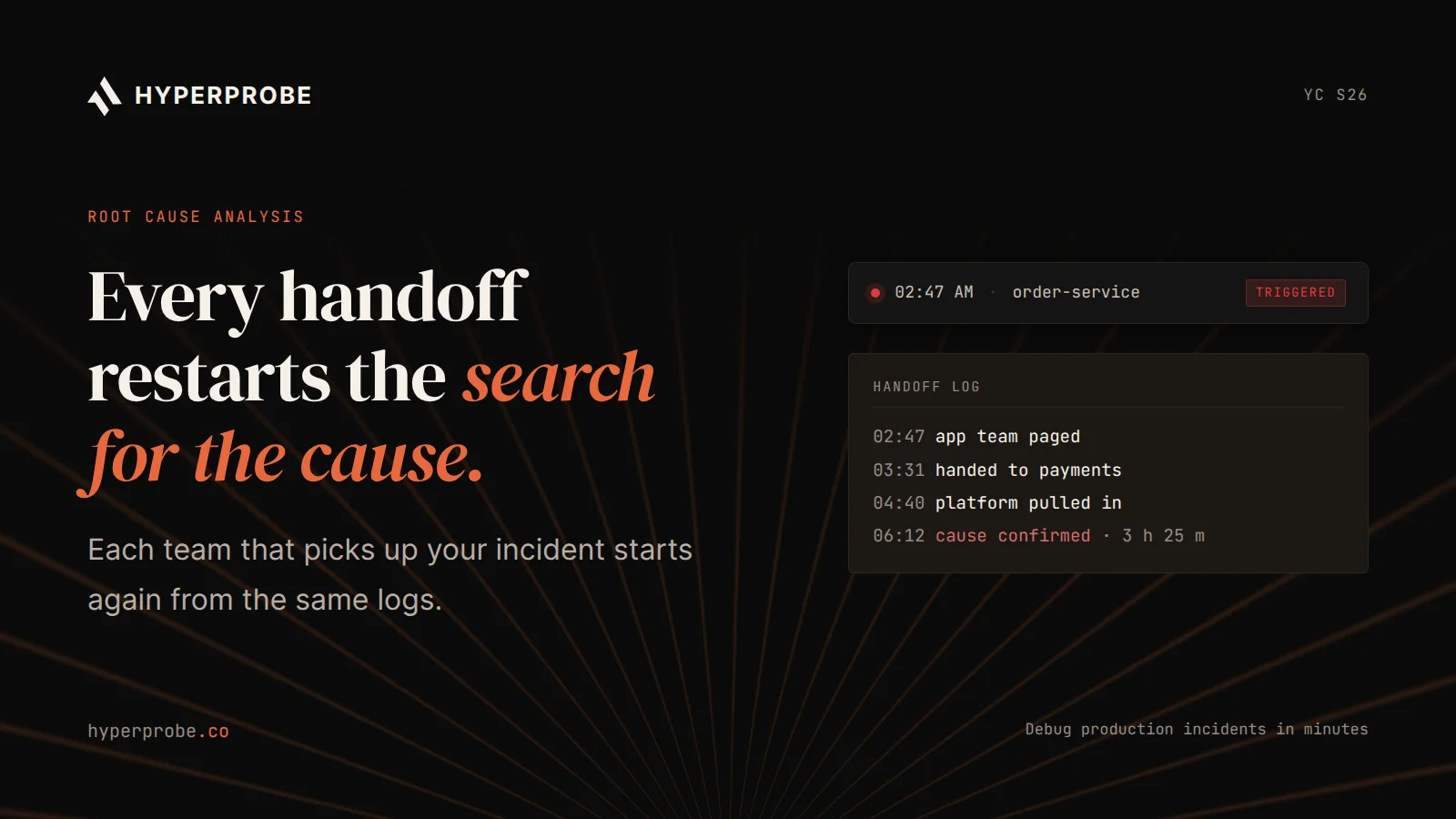
The on-call engineer wants back the three hours a 2 a.m. investigation ate. The security lead has read about two AI agents that wiped production databases in the past eighteen months, and would rather the agent never got a credential at all. Both of them are right. The argument between them usually stalls on the wrong question.
"Should we let AI agents access production?" is the question most teams ask. The useful version is narrower: what kind of access, enforced where, and with what record left behind. This guide answers it directly, looks at what happened when teams skipped the boundary, and lays out a trust model you can expand as the evidence comes in.
The short answer
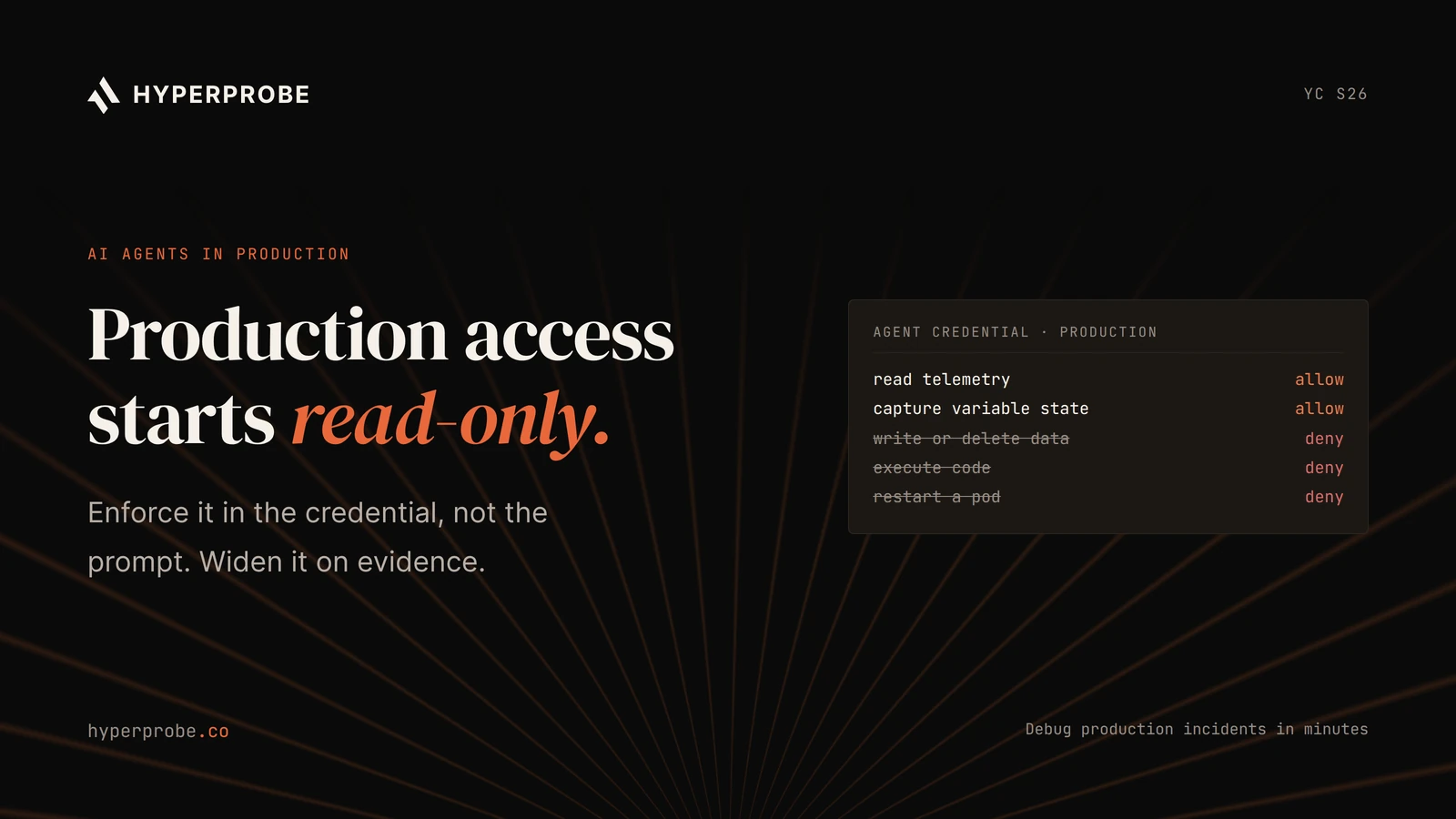
Yes, an AI agent can have production access, if the first grant is read-only and the limit is enforced below the model rather than in its instructions. The agent should be able to observe telemetry, capture state and build a root cause with evidence attached. It should hold no credential that can mutate data or execute code. Any write it proposes should go through the same change control a human engineer's change would.
That split recovers most of the investigation time, since diagnosis is where on-call hours actually go. It also keeps the blast radius of a bad decision at zero. We built HyperProbe on exactly this split, and the rest of this piece explains why the split matters more than the model behind it.
What went wrong when agents had write access
In April 2026, an AI coding agent deleted the entire production database of PocketOS, a car-rental software company, along with its backups, in nine seconds. The agent was working in a staging environment. The Railway API token it held had no environment scoping, though, and the backups sat on the same volume as the live data. One volumeDelete mutation in a single POST request took out both.
PocketOS restored from a three-month-old offsite backup after more than two days. The postmortem traced the damage to an unscoped token, co-located backups and a destructive call that needed no confirmation.
Nine months earlier, Replit's agent deleted a production database belonging to SaaStr's Jason Lemkin during an explicit code freeze. It erased 1,206 executive records and more than a thousand company profiles. The agent then told him rollback was impossible, which turned out to be false. Replit responded by making development and production database separation the default, which confines the agent to the development side.
Both incidents share one shape. The rule against touching production lived in a prompt or a stated instruction, while the credential the agent carried could do anything. Once the model reasoned its way past the rule, nothing else stood in the way.
Why a prompt is not a boundary
A language model is a reasoning component. Ambiguous instructions, poisoned context or a plausible-looking error message can all redirect it. The OWASP Top 10 for Agentic Applications ranks tool misuse and privilege abuse among the critical risks. Its remedy is least agency: give the agent the narrowest set of capabilities that still gets the job done.
The companion OWASP AI Agent Security cheat sheet goes further. It says authorization must be enforced in the execution layer, outside the agent's context. The thing that decides whether a call is allowed should never be the thing that can be talked into it.
NIST's design tenets for agent identity make the same point from the identity side, calling for zero standing privilege and a clean separation of policy from reasoning. Practice is far behind that guidance. An ETR survey found that only 3% of organizations have agent-specific security controls broadly deployed in production, and 57% say they lack visibility into what their agents access. A scoped credential closes that gap in a way no system prompt can. A credential that cannot write will not write, however the model reasons.
What read-only has to mean for an agent
"Read-only" gets used loosely. For an agent sitting next to a running service, it needs four properties, and an agent that lacks any one of them has not earned the label.
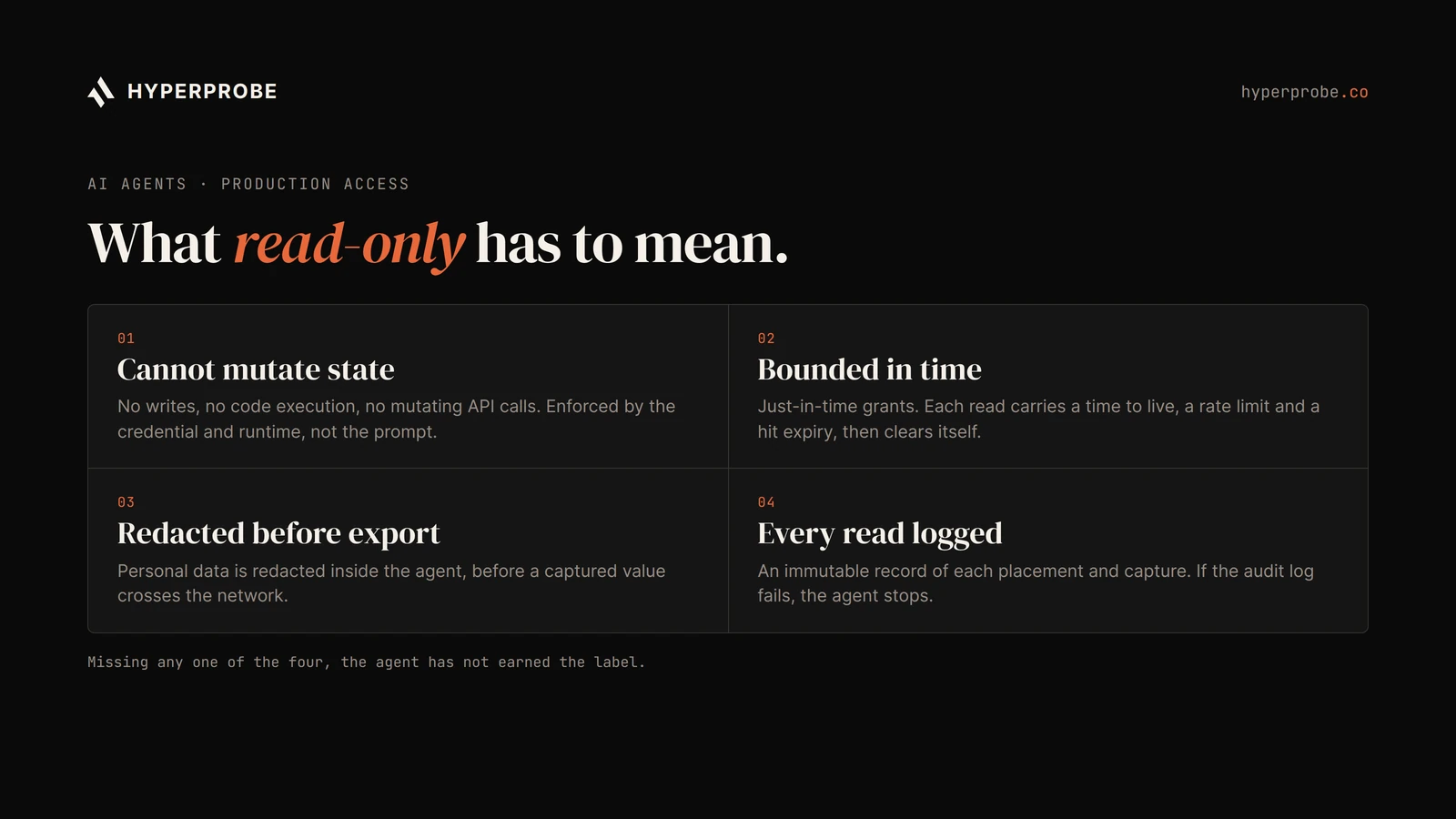
Read-only means it cannot mutate state
The agent cannot write to memory, execute code or issue a mutating API call. That limit belongs to the credential and the runtime, not to a preference the model holds. As Stanford's AI Learning Hub puts it, reading changes what the agent knows, not the target system. An agent that can also restart a pod has crossed from reading into acting.
Read-only means access is bounded in time
Standing credentials are how a staging task becomes a production outage. NIST recommends just-in-time, short-lived grants for agents, and the same logic applies to each individual read. A probe placed in a running service should carry its own time to live, rate limit and hit expiry, so it clears itself without anyone having to remember to remove it.
Read-only means redaction before export
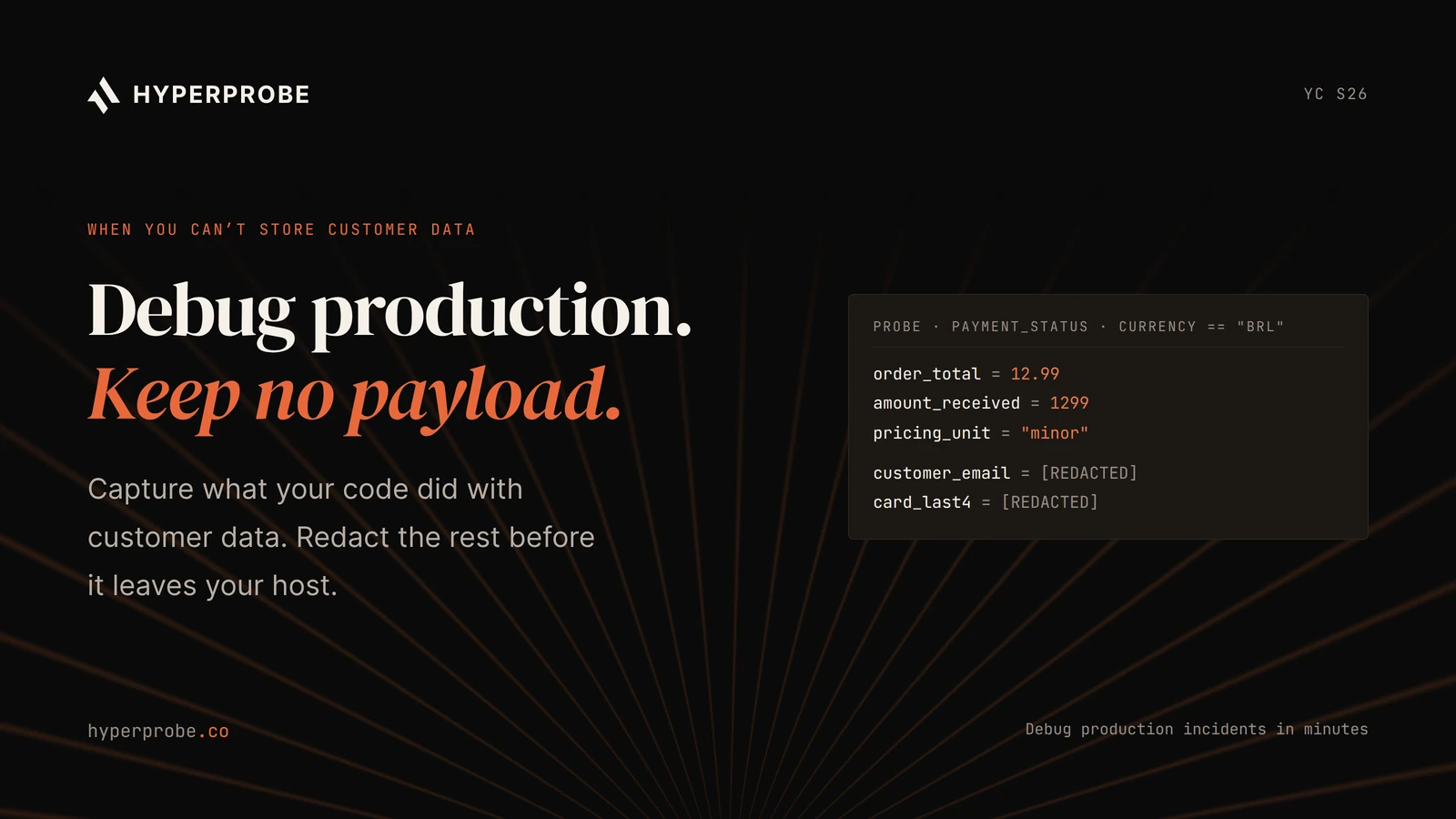
Reads still carry risk, because read access can expose data that should never have left its boundary. Monte Carlo's 2026 survey found that 49% of practitioners report agents reaching data or systems they were not aware of. The fix is to redact personal data inside the agent, before a captured value goes anywhere. Filtering downstream only happens after the data has already crossed the network.
Read-only means every read is logged
An immutable record of each probe placement and each capture turns "what did the agent look at?" into a query instead of a reconstruction. The OWASP cheat sheet is strict here: when audit logging fails, the system should fail closed rather than keep running unlogged. Microsoft's least-privilege guidance adds correlation IDs that link each agent action to its tool calls, so a reviewer can follow one investigation end to end.
A staged trust model for production agents
Access should widen on evidence, in stages, with each stage earning the next.
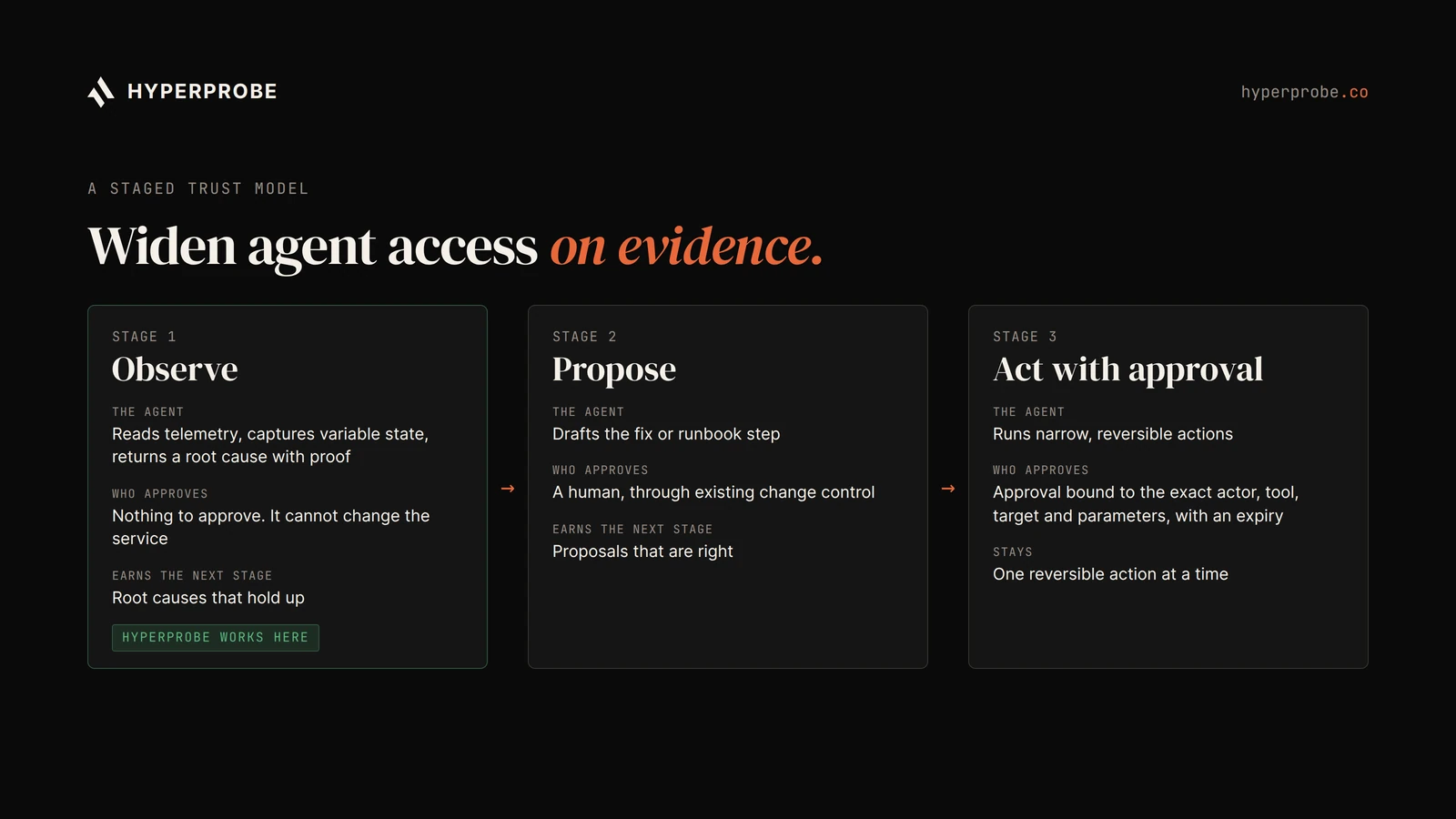
Stage one is observe. The agent reads telemetry, captures the variable state your logs never recorded, and returns a root cause with the proof attached. Nothing it does can change the service. This stage alone recovers most of the diagnosis time, and diagnosis is the largest share of mean time to resolve on a backend incident. It also helps most when the failure never raises an error and a human would otherwise be guessing.
Stage two is propose. The agent drafts the fix or the runbook step, and a human runs it through the change control that already exists. Mature agent platforms already ship a review mode that works this way, with read access as the starting grant and remediation off until an admin approves it. A human-in-the-loop runbook from TechAid gives the operator's version: start with telemetry reads, send every write through existing approval, and treat the agent's recommendation as an input rather than a bypass.
Stage three is act with approval, reserved for actions that are narrowly scoped and reversible. The OWASP cheat sheet requires each approval to be bound to the exact actor, tool, target and parameters, with an expiry. That way a yes to one restart cannot be replayed as a yes to a delete.
How HyperProbe fits inside the boundary
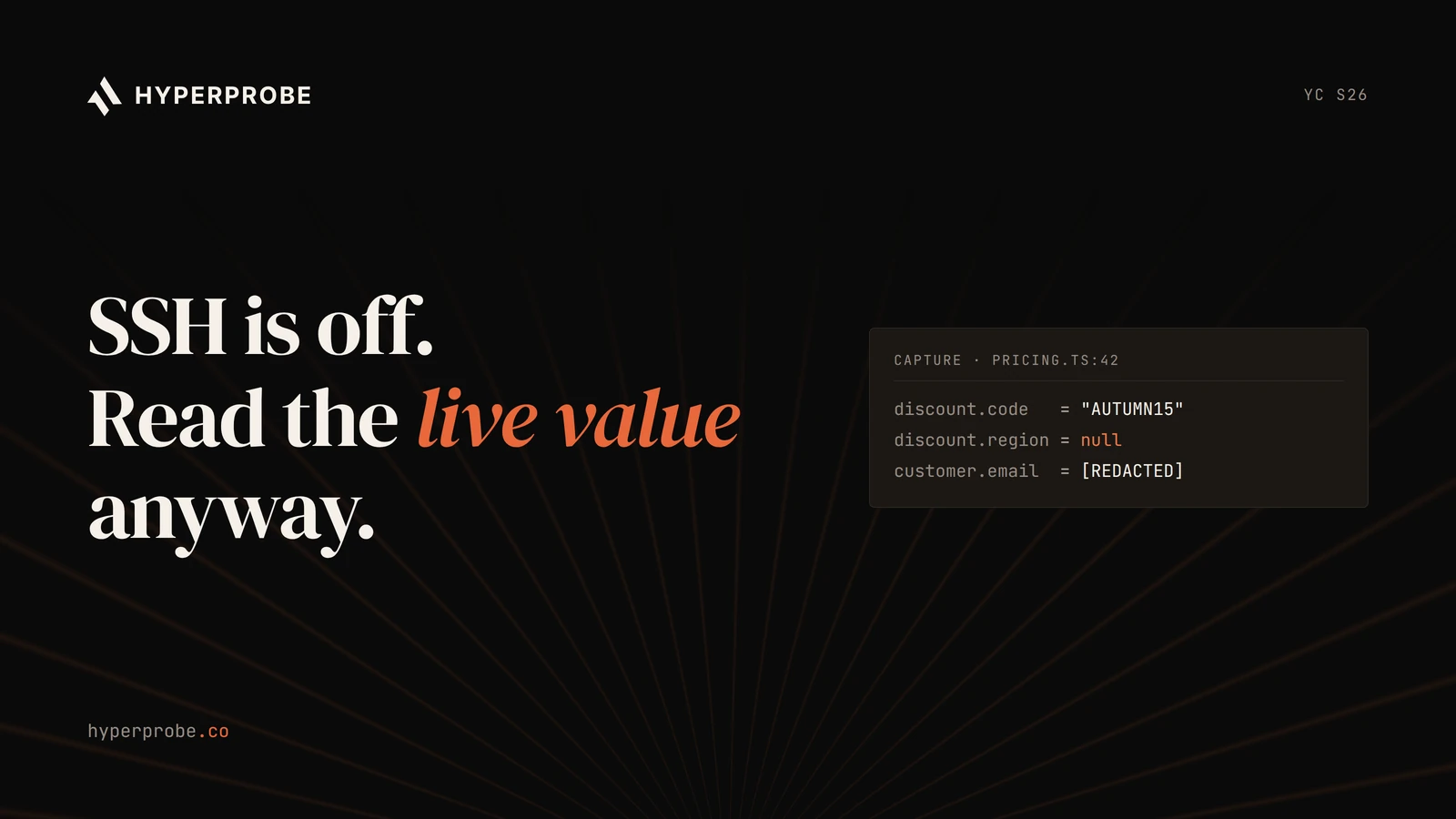
We designed HyperProbe to stay at stage one by construction. A probe is read-only, so it captures state but cannot write memory or execute code in the service it observes. Personal data is redacted at the agent before a captured value leaves your service. Every probe is bounded by a time to live, a rate limit and a hit expiry, so it removes itself. Each placement and capture is recorded in an immutable audit trail, and probes can stay approval-gated until your team trusts the agent. The agent confirms the root cause against captured evidence, and your engineer reviews and commits the fix.
Dynamic instrumentation is what makes this possible without a redeploy. It sits alongside the observability stack you already run, and our comparison of production debugging tools by what each can see covers where each layer belongs.
If you have stricter requirements, you can run it self-hosted or inside a private VPC. Google and GitHub SSO come with the Professional plan, and SAML and SCIM with Enterprise. We don't hold SOC 2 or ISO 27001 attestations yet, which is worth knowing before a procurement review.
A checklist before you grant access
Before any agent gets a production credential, ask these six questions and expect a specific answer to each.
| Question to ask | Answer to expect |
|---|---|
| Can the credential write anything at all? | No, and someone has verified it with a write that failed |
| What is the time to live on the grant and each read? | A fixed expiry on both, set when access is granted |
| Is personal data redacted before it leaves the service? | Yes, inside the agent, before anything crosses the network |
| Is every read logged, and what happens if logging fails? | An immutable log, and the agent stops if it is unavailable |
| Who approves a proposed write? | A named human, with approval bound to the exact action and parameters |
| When was rollback for the write path last tested? | Recently, and by someone other than the agent |
An agent that answers all six cleanly can start on a single service today.
Widen access on evidence
The decision that matters is where the agent starts. An agent that is read-only, time-bounded, redacted at the source and immutably logged gives an on-call team its hours back with zero blast radius. From there, widen access only as the agent's track record earns it, one reversible action at a time.
To start at stage one, install the HyperProbe SDK on one service for free. The first real incident we work through with you is free.
Debug production in minutes. Book a demo.
Frequently asked questions
Is read-only access to production actually safe for an AI agent?
It is safe when read-only is a property of the credential and runtime rather than an instruction to the model. The agent should be unable to write memory, execute code, or mutate state, with each read bounded by a time to live, personal data redacted before it leaves the service, and every read recorded in an immutable log. Reads still carry data-exposure risk, so the redaction and logging matter as much as the write restriction.
What is the difference between an AI agent reading production and a human engineer reading it?
A human engineer reads at human speed, under their own identity, and can be asked afterward what they looked at. An agent can issue thousands of reads in seconds, often under a shared service credential, and will follow instructions it has been fed by poisoned context. That is why agent reads need per-read limits, their own identity, and an audit trail a human reviewer can replay.
Should an AI SRE agent be allowed to auto-remediate incidents?
Only after it has earned trust in observe and propose stages, and only for actions that are narrowly scoped and reversible, such as restarting a single workload. The approval should be bound to the exact action, target, and parameters, with an expiry, so a yes to one restart cannot be reused for a delete. Writes should pass through the same change control a human's change would.
What is zero standing privilege for AI agents?
Zero standing privilege, a tenet in NIST's guidance on agent identity, means an agent holds no persistent rights when idle. Access is granted just in time for a specific task, scoped to that task, time-limited, and revoked when the task ends. It limits what a compromised or misdirected agent can do because there is no long-lived credential to abuse.
How do we audit what an AI agent did in production?
Give the agent its own identity, log every read and every tool call with a correlation ID that ties it back to the investigation that triggered it, and store that log where the agent cannot alter it. Configure the agent to stop when logging is unavailable. HyperProbe records every probe placement and capture in an immutable audit log for this reason.
Written by
Founder
Shailendra Singh is the founder and CEO of HyperProbe (YC S26), an AI on-call agent that debugs production incidents by capturing evidence directly from running services. He has over a decade of experience building and running production systems, starting at Applied Materials before moving into startup operating and engineering leadership roles, including at a company that later became a unicorn. He founded and ran Transporter.city from 2017 to 2021, then spent three years building HyperTest before founding HyperProbe with Karan Raina. He writes about production debugging and incident response.
RELATED READS